
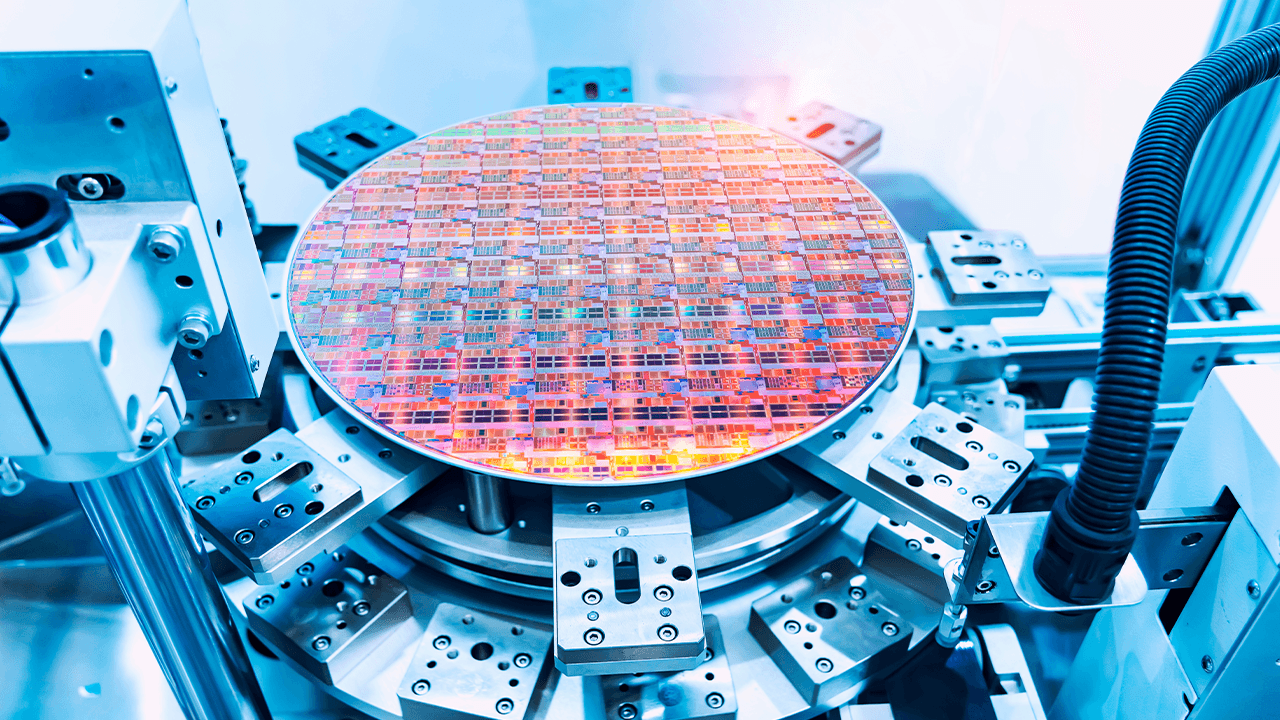
In a significant development, researchers at the Chinese Academy of Sciences' Shanghai Institute of Optics and Fine Mechanics have made a major stride in EUV lithography, a technology critical for advanced chip manufacturing. Their laser-produced plasma EUV light-source platform achieved a 3.42% conversion efficiency in March 2025, a key metric that narrows the gap with industry leader ASML.
This breakthrough comes amid ongoing export controls that have barred China from purchasing ASML's most advanced EUV tools since 2019. The research, led by former ASML scientist Lin Nan, demonstrates China's determination to achieve self-sufficiency in chipmaking technology.
While the lab results are promising, the power output remains at 100-150 watts, far below ASML's commercial benchmark of 600 watts. This gap highlights the challenge of transitioning from prototype to production-ready systems, as higher power enables greater wafer throughput and economic viability.
In parallel, Alibaba is making waves in the AI software space. At the World AI Conference in Shanghai, the company previewed its Qwen3.8-Max-Preview, a multimodal model with a staggering 2.4 trillion parameters using a sparse Mixture-of-Experts design. Additionally, T-Head, Alibaba's chip unit, announced it would open-source its SAIL software stack, positioning it as an alternative to Nvidia's CUDA ecosystem.
These developments underscore China's multi-pronged strategy to reduce dependence on Western technology, from hardware to software. The EUV progress, while still in early stages, signals a potential shift in the global semiconductor landscape, with implications for supply chains and geopolitical dynamics.
As China pushes toward its goal of producing advanced chips on entirely domestic machines by 2028, the world watches closely. The combination of hardware breakthroughs and software innovation could reshape the competitive landscape, challenging the dominance of established players like ASML and Nvidia.



Comments
No comments yet
Be the first to share your thoughts and start the conversation!