Trump's Crypto Empire: How Binance's Pardon Fueled a $5 Billion Stablecoin Boom
The Rise of World Liberty Financial's USD1
World Liberty Financial, the Trump family's cryptocurrency startup, recently achieved a major milestone: its signature digital coin, USD1, reached a total circulation of $5 billion, cementing its place among the world's top cryptocurrencies. The company celebrated this achievement on social media, with Eric Trump marking the moment with fire emojis.
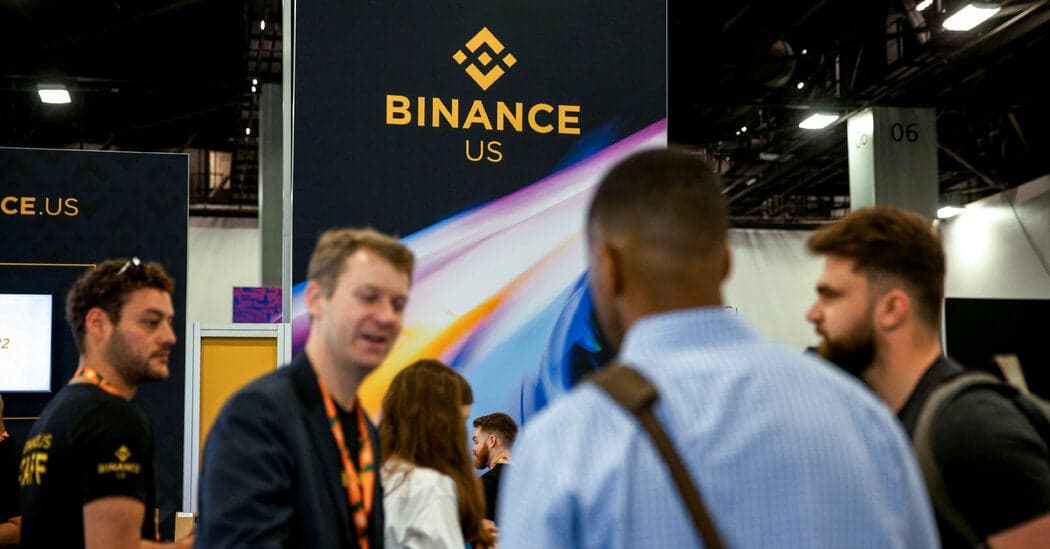
Much of this success can be attributed to an alliance with Binance, the world's largest cryptocurrency exchange. This relationship has become particularly significant since President Trump pardoned Binance's founder, Changpeng Zhao, in October 2025.

Credit: Marco Bello/Reuters
Binance's Crucial Role
As the primary trading platform for USD1, Binance has become a vital engine for the Trump family's crypto business. Approximately 85% of the $5 billion USD1 coins in circulation are held in accounts on Binance, according to data firms Arkham and Nansen. This dominance persists even though Binance's platform is only available outside the United States.
Jonathan Reiter, co-founder of crypto data firm ChainArgos, noted: "Most of the money is sitting within Binance, and has really always sat within Binance. They are the main trading venue for this."
Controversial Connections
The relationship between World Liberty and Binance has faced heavy scrutiny from ethics experts and members of Congress, who view it as a significant conflict of interest. President Trump now serves as both a crypto mogul and the industry's chief policy maker, creating potential ethical concerns.
The White House has voiced support for legislation that would make it easier for crypto exchanges to operate in the United States, while simultaneously overseeing a family business that benefits from such policies.

Credit: Tamir Kalifa for The New York Times
Strategic Promotions and Incentives
Since the pardon, Binance has implemented several strategic promotions to boost USD1 adoption:
- Fee-free conversions: In December, Binance announced customers could convert other firms' stablecoins to USD1 without paying fees
- Interest programs: The exchange offered customers the chance to earn interest on USD1 holdings
- $40 million rewards pool: In January, Binance launched a promotion offering rewards to customers who held USD1
These incentives proved remarkably effective. Over one week following the $40 million rewards announcement, the amount of USD1 traded worldwide shot up by nearly $2 billion.
The Stablecoin Business Model
Stablecoins represent a highly profitable sector of the crypto industry. Issuers like World Liberty accept deposits from traders, provide coins in return, and then invest the deposits to generate yield. According to financial reports, World Liberty has invested most of its deposits in government money-market funds, generating an annual return of about 4%—potentially $200 million in revenue on $5 billion in deposits.
Political and Regulatory Implications
The Trump administration has orchestrated a complete overhaul of the government's approach to cryptocurrency, ending a regulatory crackdown that began during Trump's first administration. At the same time, the Trump family has built a sprawling network of crypto businesses, with World Liberty at the center of this empire.

Credit: Spencer Platt/Getty Images
Legislative Challenges and Loopholes
The GENIUS Act, signed by President Trump last year, created industry-friendly rules for stablecoins but prohibited issuers from offering interest to customers. However, the legislation left a workaround: while issuers cannot offer interest, exchanges can—creating potential for similar incentives on U.S. platforms.
Congress is now considering broader crypto regulation, with banking lobbyists pushing to close this loophole. The White House has convened meetings between banking and crypto representatives to negotiate compromises.
Defense and Denials
A spokesman for World Liberty stated that promotional incentives were funded by the Trump crypto company, not Binance, calling this arrangement "standard practice" for stablecoin issuers. A Binance spokeswoman emphasized that "it is not uncommon for large exchanges to hold large amounts of certain tokens" and that Binance offers promotions for a wide range of coins.
A lawyer for Changpeng Zhao asserted that "there are no conflicts of interest or quid pro quos," while a White House spokeswoman maintained that Mr. Trump's assets are in a trust managed by his children and that "there are no conflicts of interest."
The Future of Crypto Politics
As the debate continues in Congress, the relationship between Binance and World Liberty Financial highlights the complex intersection of cryptocurrency, politics, and regulation. With President Trump having "direct skin in the game because of World Liberty and USD1," according to crypto expert Lee Reiners of Duke University, the outcome of these policy discussions could have significant implications for both the Trump family's business interests and the broader crypto industry.
- #binance
- #trump
- #stablecoin
- #regulation
- #usd1
Comments · 0